The best AI SEO agent for your team is the one that can complete the work you need with evidence and controls you can inspect. A research assistant, a content workflow and a system that deploys website changes solve different problems, even when all three use the word “agent.” If you want a wider view than agents, start with our guide to the best AI SEO Software for automation.
This comparison covers ten products by their documented workflow, execution scope and review requirements. It includes adjacent tools where they help buyers understand the choice; inclusion does not mean every product is a fully autonomous SEO operator. Agencies managing many client sites should also read SEO automation software for agencies, and content-heavy teams can compare AI SEO tools for content automation.
Disclosure and review method: I work on product and growth at Keytomic, which appears in this list. This is an editorial comparison of official product and pricing material reviewed on October 19, 2026, with Keytomic release details checked against our current product context. It is not a controlled hands-on benchmark of all ten products. The order is a reading sequence, not a measured performance ranking, and no traffic outcome is implied.
What qualifies as an AI SEO agent?
For this comparison, an agent should do more than generate a paragraph or display a chart: it should help pursue an SEO task through multiple steps, using data or tools along the way. Execution can still be bounded by approvals, integration limits and the plan you buy. Keytomic, for example, is an AI SEO platform that plans work with an SEO topical map generator before it drafts or publishes anything.
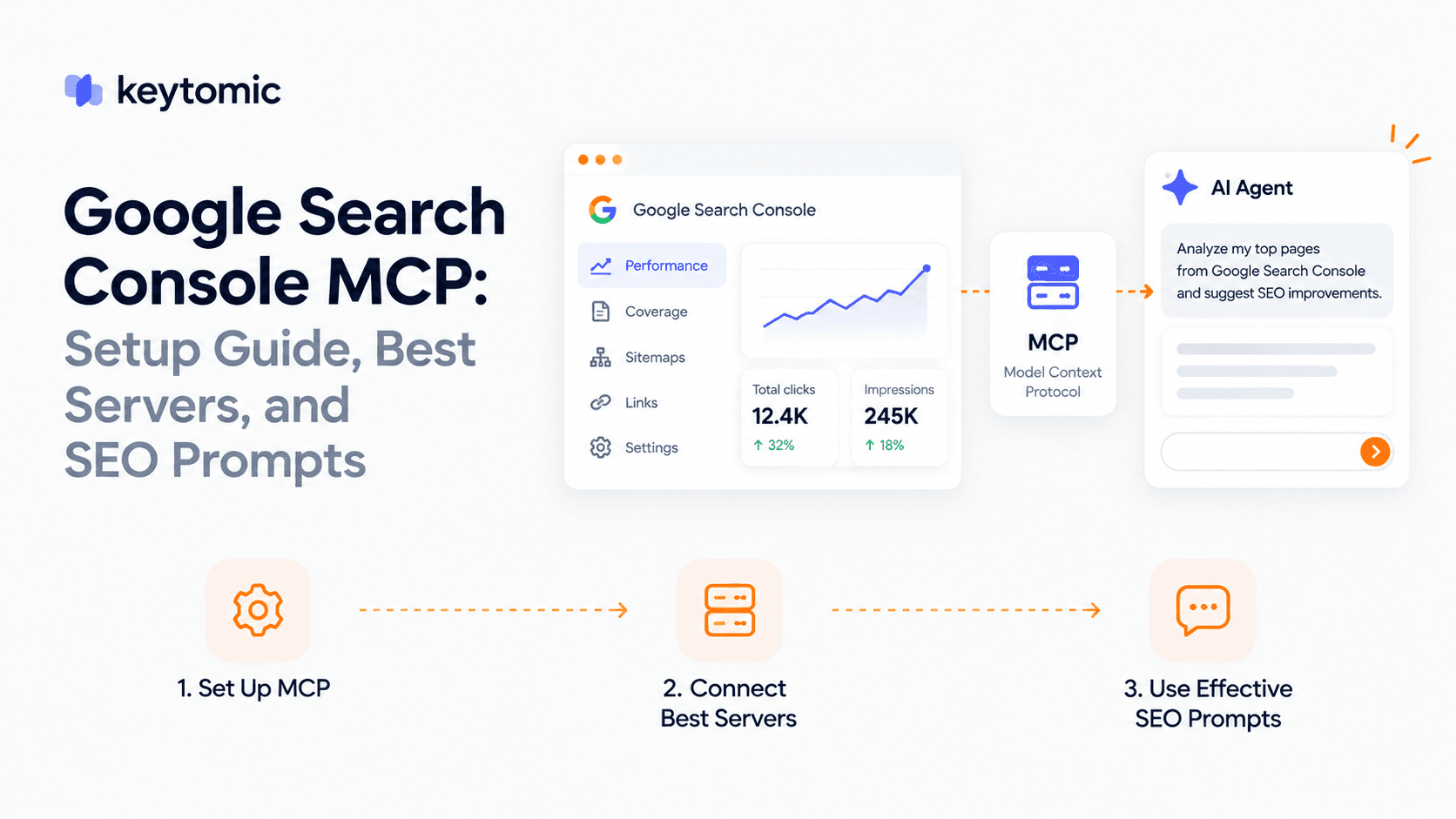
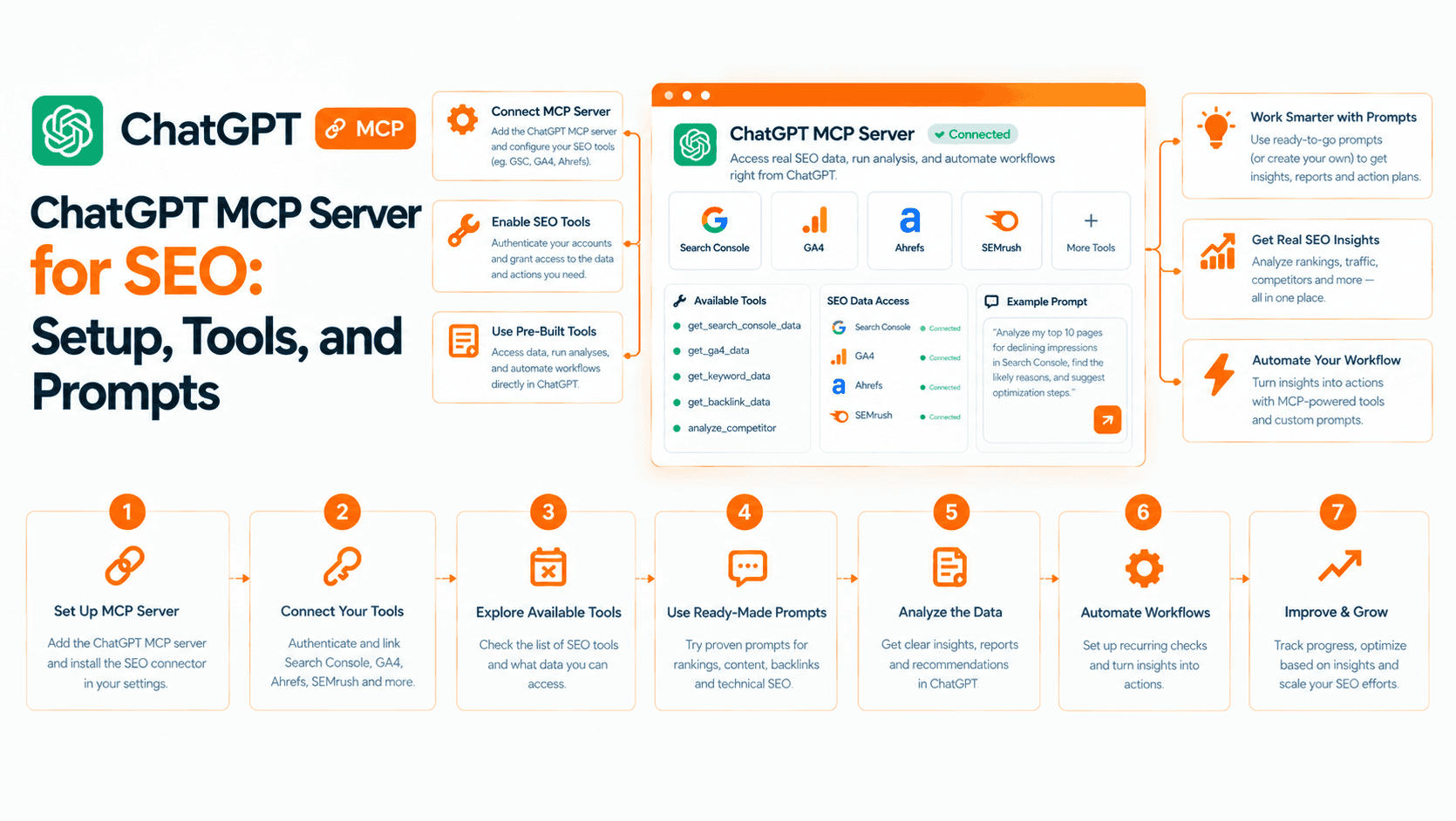
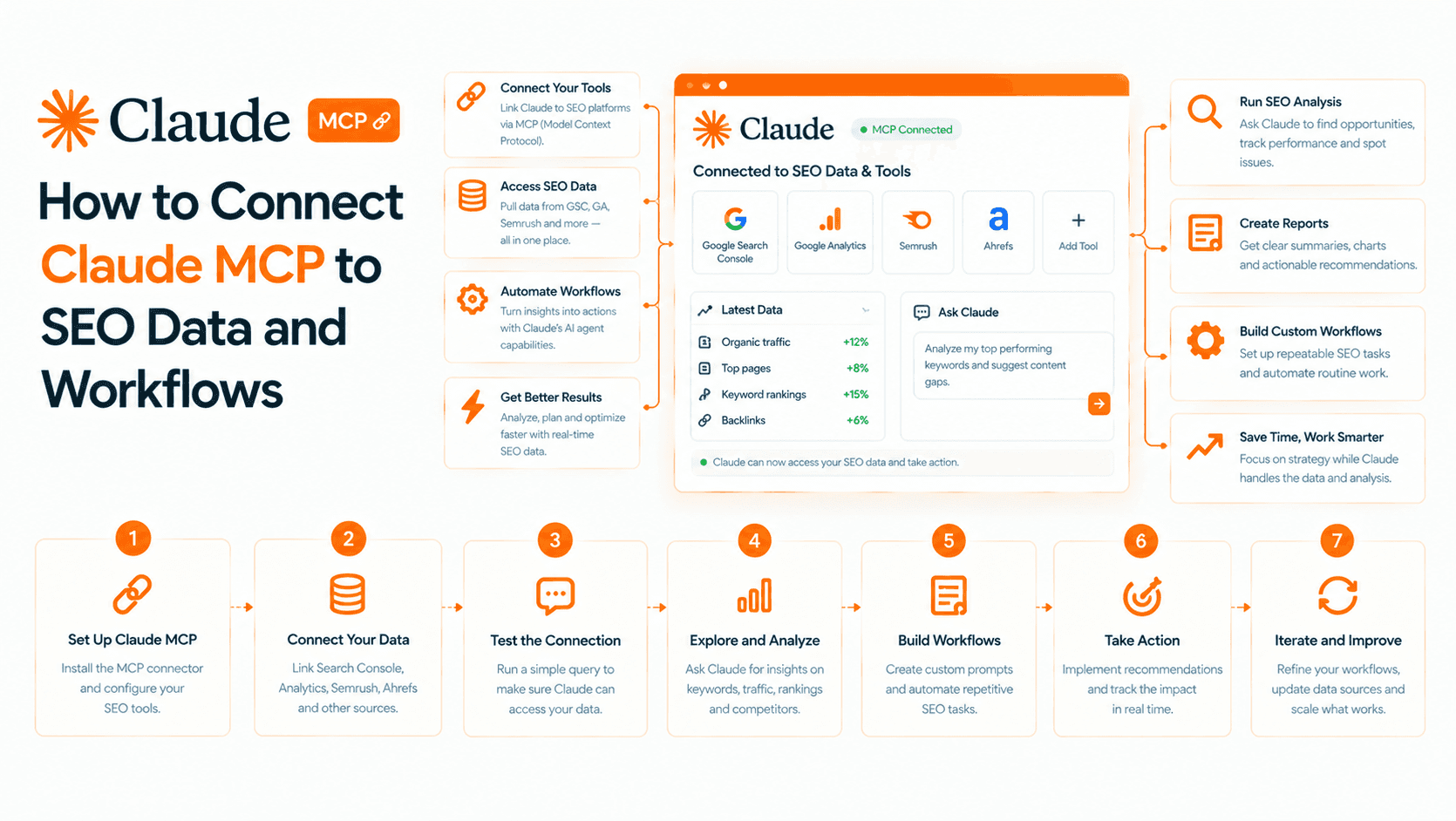
Start with what qualifies as an AI SEO agent if the terminology is new. An assistant connected to SEO tools can also handle parts of the job, but someone must define the task and verify the result. MCP for SEO workflows explains that distinction in practice. Keytomic exposes its tools to assistants through an SEO MCP server, and solo operators can see how this works in AI SEO for founders.
How we compared the products
We used five questions rather than assigning numerical scores that could imply testing we did not perform:
Workflow ownership: Does the product analyze, prepare, execute or cover several of those stages?
Grounding: What first-party data, crawl evidence or third-party research informs the recommendation?
Execution: What can it change, and through which integration or deployment method?
Control: Where can a person inspect, approve, restrict or reverse the work?
Verification: What evidence shows the change happened and whether the outcome improved?
Prices below are selected public entry points, not comparable total costs. Billing period, sites, usage, AI charges and feature tiers can materially change the bill. Verify current official terms before choosing a plan.
AI SEO agents at a glance
Product | Workflow to investigate | Important buying question |
|---|---|---|
Search Atlas OTTO | Deployment of technical and on-page changes | Which changes use the deployment layer, and what persists? |
Frase | Research, writing, optimization and publishing | Which automation and review features are in your plan? |
Ahrefs / Letaido | Tool-connected research and assistant work | Which data, integrations and write permissions are available? |
Keytomic | Research-to-publishing SEO workflow with AI visibility | Which actions are in the platform versus released through MCP? |
AirOps | Custom content operations | Who will build, review and maintain the workflow? |
Ryze SEO Autopilot | Packaged SEO automation | How are proposed site changes inspected and approved? |
Rankability Serena | SEO strategy and content operations | Which deliverables are exported versus written directly to the site? |
Alli AI | Scaled website SEO deployment | What is the deployment scope and recovery process? |
Writesonic | Content plus search and AI visibility workflows | Which agentic features are available at your tier? |
Fenn | AI visibility monitoring and draft suggestions | Who approves and publishes the proposed changes? |
1. Search Atlas OTTO: investigate for website deployment
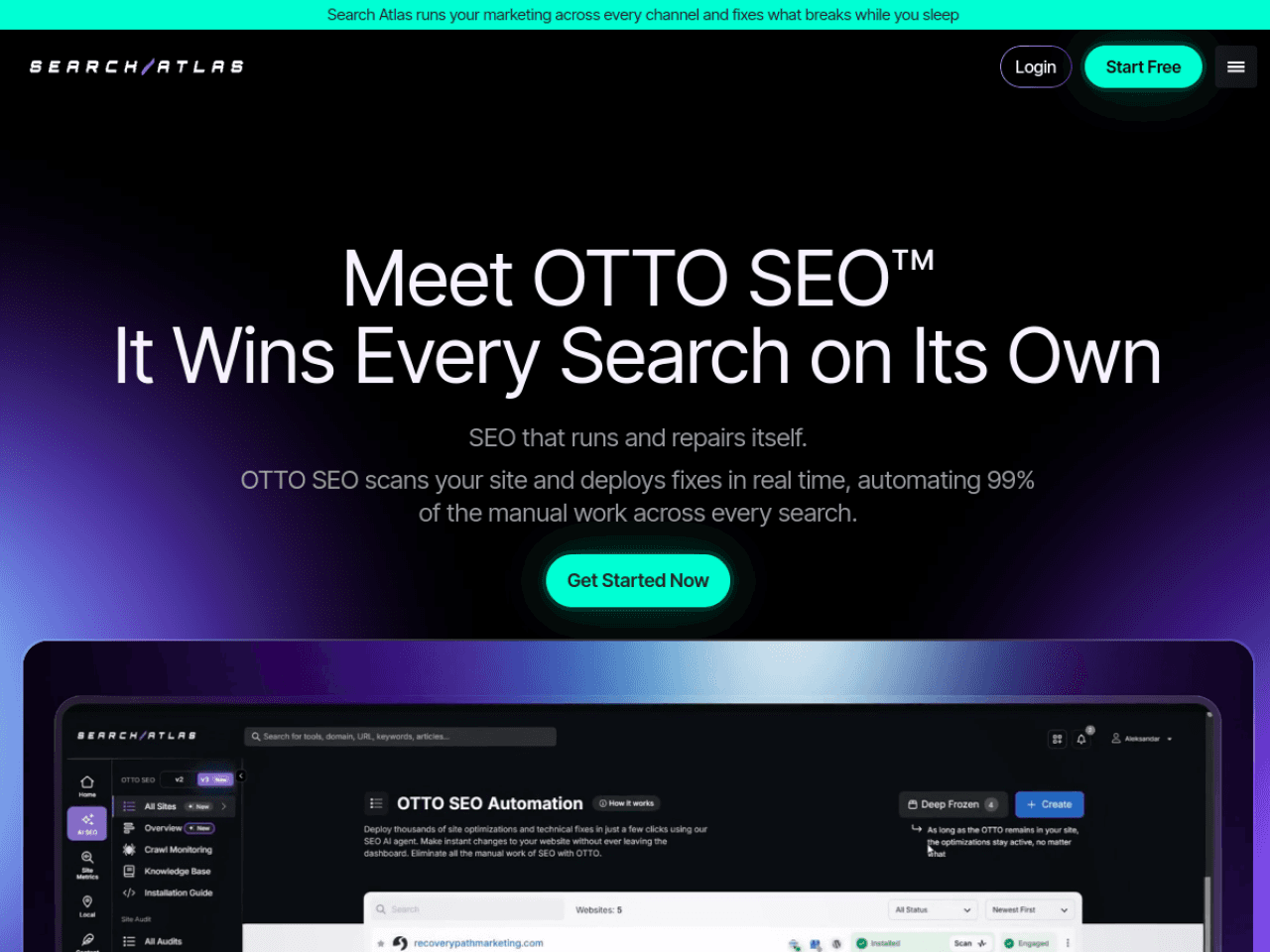
OTTO is worth evaluating when the bottleneck is getting technical and on-page recommendations onto a website. Its official product material describes automated deployment, optional approvals and several implementation methods, including pixel, Cloudflare and CMS-related approaches. The available method matters because it affects where changes live and how your team verifies them. Source: OTTO product page.
Evaluate it for: teams with a queue of site changes and enough technical oversight to check the deployment layer. A useful pilot is a small set of approved metadata or on-page changes on a noncritical section.
Check carefully: the current vendor page describes DeepFreeze as retaining changes after cancellation. Older descriptions that every fix disappears when a pixel is removed should not be treated as a universal rule. Ask how persistence works for your deployment method, which changes it covers and how rollback behaves.
Evidence to request in a trial: the original value, deployed value, affected URL, rendered result and recovery steps. Do not treat a vendor's speed or growth claim as your expected outcome. Review the current Search Atlas plans for site and deployment limits.
2. Frase: investigate for content research and production
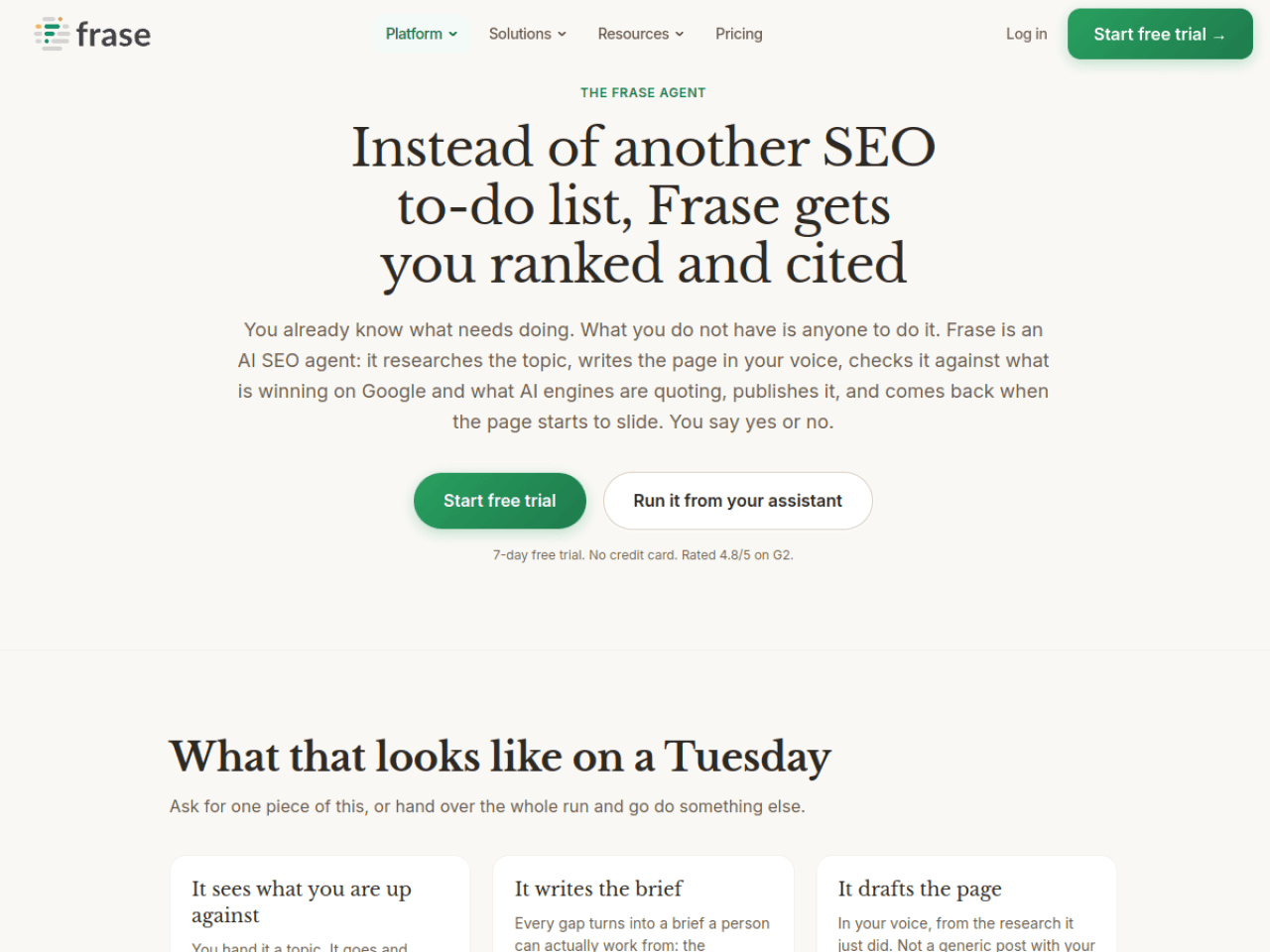
Frase combines research, content creation and optimization with publishing-related integrations. Its current pricing material also lists MCP and CLI access and describes opt-in publishing automation. Starter is listed at $39 per month on annual billing or $49 month to month, with usage limits. Source: Frase pricing and feature matrix.
Evaluate it for: a content team that needs a repeatable path from a topic to a researched, reviewed article. Inspect the quality of the brief, source handling and editor workflow rather than judging only the speed of the first draft.
Check carefully: article allowances, audit pages, ContentGuard coverage, integration availability and the plan's publishing controls. MCP access is not proof that every web-app action is exposed to the assistant.
Evidence to request in a trial: one brief, one factual draft with traceable sources, an editor's revision and a publish-ready output in your actual CMS. Record which work remained manual. An attractive generated article is insufficient if your team must rebuild every citation and internal link.
3. Ahrefs / Letaido: investigate for connected research
This category needs a naming distinction. Ahrefs provides an official SEO MCP connection, while the current Letaido site describes an AI workspace with Ahrefs access and other integrations. Do not assume that every earlier “Agent A” description maps to the same current product or permission set. Use the present documentation for the product you are buying. Sources: Ahrefs SEO MCP, Letaido.
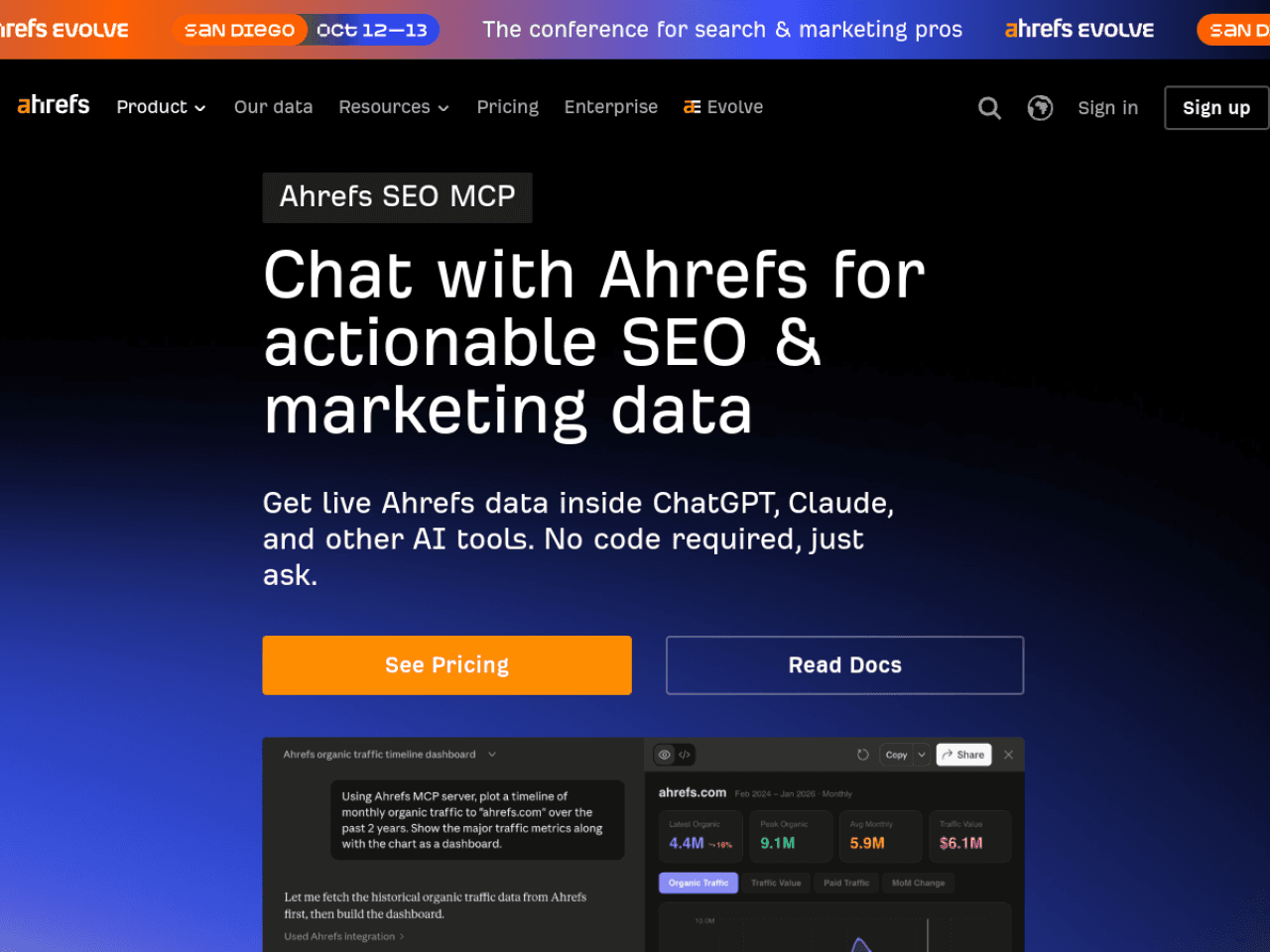
The image is retained from the earlier article and may show earlier branding; it is not evidence of the current Letaido interface.
Evaluate it for: an analyst who wants an assistant to use SEO research alongside other authorized tools. The strength to investigate is how well it retrieves and explains relevant evidence across a bounded task.
Check carefully: Letaido's public entry price is $99 per month for one workspace, with separate AI usage costs described on its site. Review workspace permissions, activity logs and external communication controls. Data access through MCP and permission to act in another integration are separate decisions.
Evidence to request in a trial: the original query, source data, filters and final recommendation. Ask which tool provided each important number and whether the assistant can reproduce the result.
4. Keytomic: investigate for a connected SEO production workflow
Keytomic brings keyword research, planning, article creation, CMS publishing, indexing support and performance measurement into one platform. It also includes AI search visibility work, so teams can examine Google organic performance alongside observed brand mentions and citations in AI responses. Source: Keytomic features.
Evaluate it for: agencies, SaaS businesses and small content teams whose bottleneck is moving approved work through the full research-to-publishing pipeline. Test the CMS publishing workflow with your platform, brand instructions and author profile.
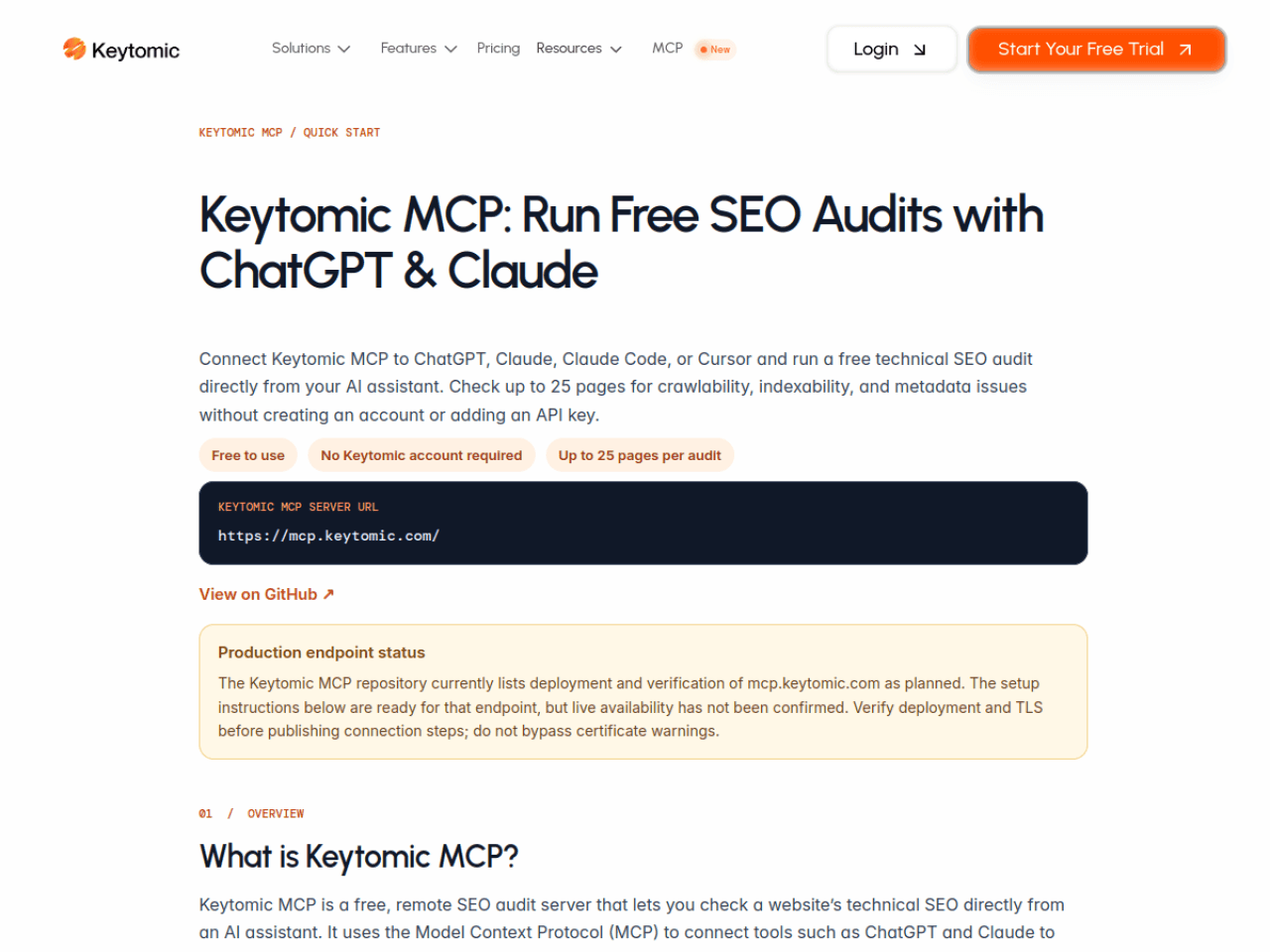
Check carefully: the platform and MCP interface have different scopes. Released MCP work covers GSC insights, audits, project information, brand and author settings and indexing-related tools. MCP calendar work is ready for production; expanded analytics and Bing work are in progress. MCP article generation, image creation and direct CMS publishing remain planned. Consult the Keytomic MCP documentation for the documented setup and available tools.
The Content Refresh / Improvement module is in progress, and the enhanced audit report is in review. Existing content tools and audits should not be described as those unreleased upgrades. Check the current Keytomic plans for billing, project and usage limits.
Evidence to request in a trial: a relevant topic, a reviewable brief, a sourced article, correct author attribution, an approved CMS output and a measurement plan. AI visibility tracking records prompt observations and citations; it does not independently establish a Google traffic increase or a causal revenue impact.
5. AirOps: investigate for custom content operations
AirOps is a candidate when your team wants to build a repeatable content workflow around its own research, knowledge and review process. Current plans are organized around tasks, brand kits, knowledge bases and team capacity. The public pricing page emphasizes usage and plan scope; confirm the quote and allowances for your workflow rather than assuming a flat per-article price. Source: AirOps pricing.
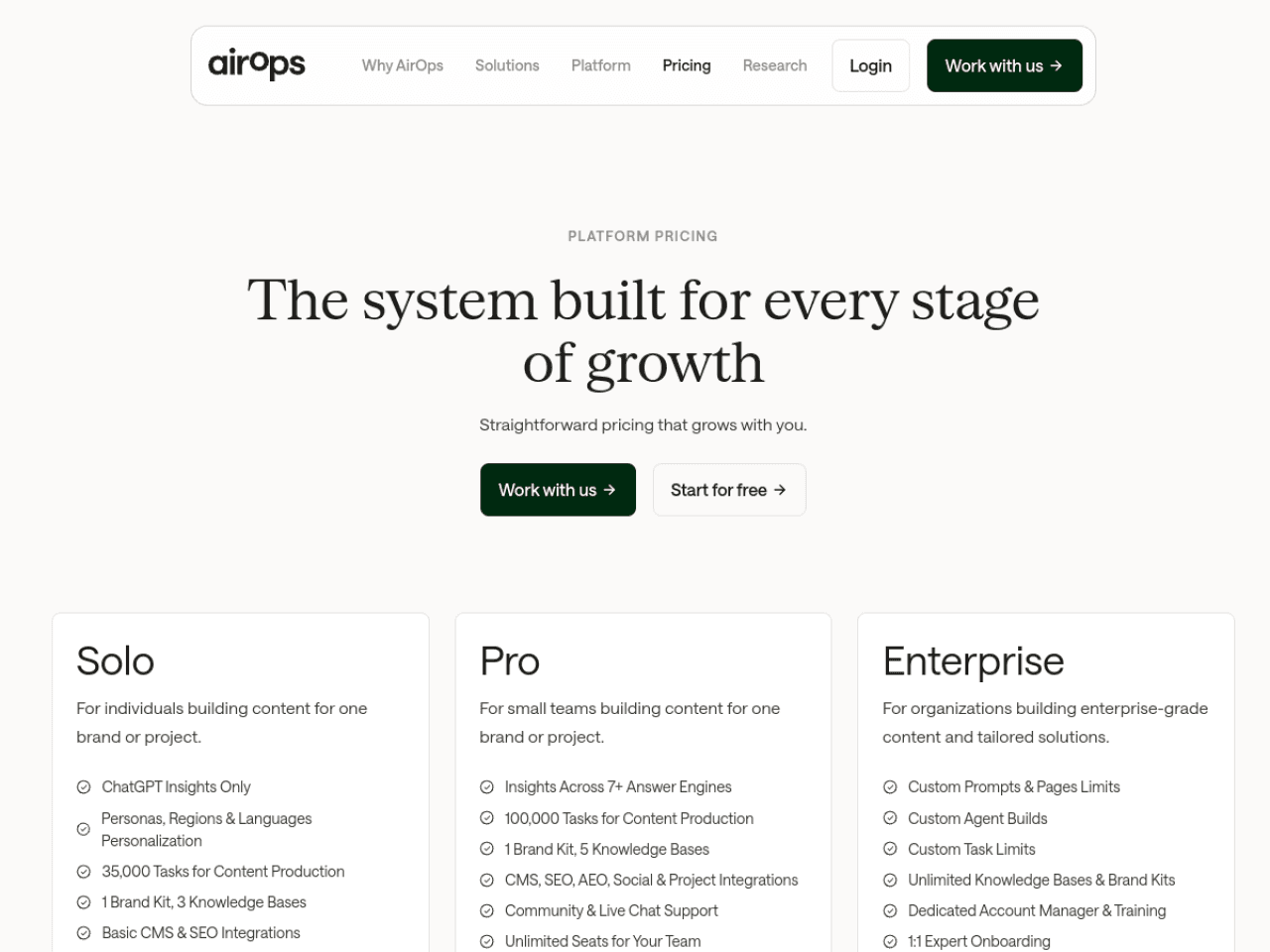
Evaluate it for: an operations-led team with recurring content tasks and someone accountable for workflow design. Flexibility is useful when your process includes original research, several reviewers or a nonstandard CMS handoff.
Check carefully: who maintains prompts, knowledge sources, integration credentials and failure handling. Building a workflow creates ongoing ownership; it should not depend on one person remembering undocumented steps.
Evidence to request in a trial: the same input run through the workflow several times, a review checkpoint, an error case and a final output in the destination system. Measure the editor's total time, including corrections, rather than only generation time.
6. Ryze SEO Autopilot: investigate for packaged execution
Ryze's SEO offering presents a packaged automation workflow covering technical issues, content and search visibility. Its pricing page lists SEO Autopilot at $129 per month; the paid advertising product is a separate offer. Treat growth percentages and delivery timelines on marketing pages as vendor claims, not a forecast for your site. Sources: Ryze SEO, Ryze pricing.

Evaluate it for: teams that prefer a packaged service over constructing their own automation. Scope the pilot around a real site problem and the precise integrations you use.
Check carefully: how the product proposes, approves and applies changes, what access it needs, and what work is included in the SEO plan. A broad “autopilot” label does not tell you whether an individual action requires a person or a deployment integration.
Evidence to request in a trial: an auditable list of completed work and before-and-after page checks. Separate the amount of activity from the quality of the decisions and the subsequent organic results.
7. Rankability Serena: investigate for strategy and content operations
Rankability describes Serena as an AI SEO strategist spanning research, planning, on-page analysis, reporting and AI visibility. Its current Starter plan is listed at $97 per month and includes content projects, with other limits and features in the plan matrix. Sources: Serena product page, Rankability pricing.
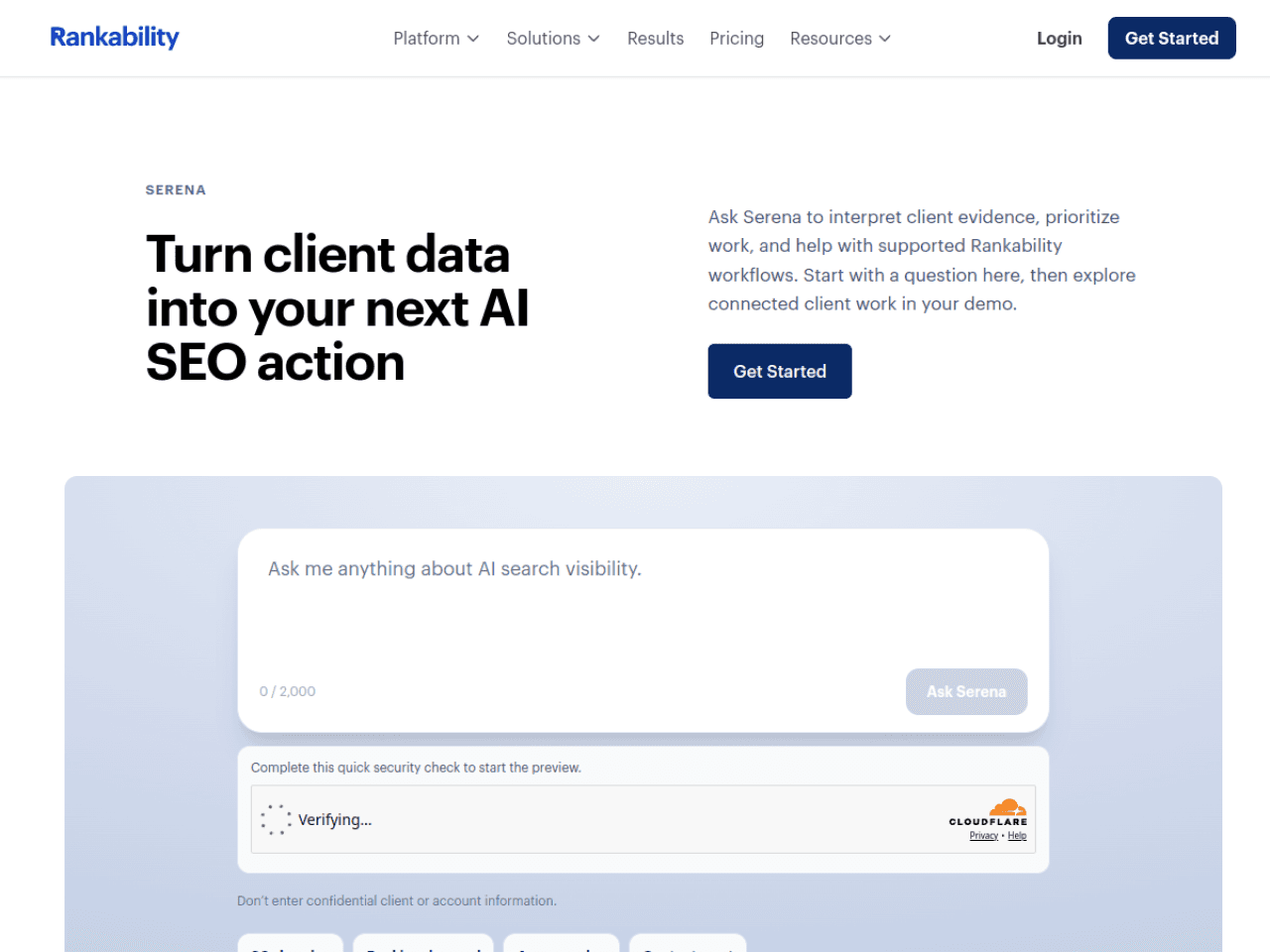
Evaluate it for: agencies that need to turn research into client-ready plans and content deliverables. The practical question is how effectively your team can review and use the output.
Check carefully: distinguish strategy, content generation, optimization, export and direct website writes. The documented workflow includes research and content operations; verify the exact site-writing and delivery scope in a trial rather than assuming either full execution or no execution. Also check AI query limits and the approvals available to clients.
Evidence to request in a trial: a client brief, the supporting research, a prioritized plan and the exact handoff to the implementation owner. A useful plan needs enough specificity that a writer or developer can act without another round of interpretation.
8. Alli AI: investigate for scaled site changes
Alli AI is a candidate for teams evaluating website-level SEO deployment across multiple pages or sites. Its pricing matrix organizes plans around site and page allowances, crawl frequency and deployment-related capabilities. The Business entry shown on annual billing is $249 per month, billed annually; verify the billing selector and included limits. Source: Alli AI pricing.
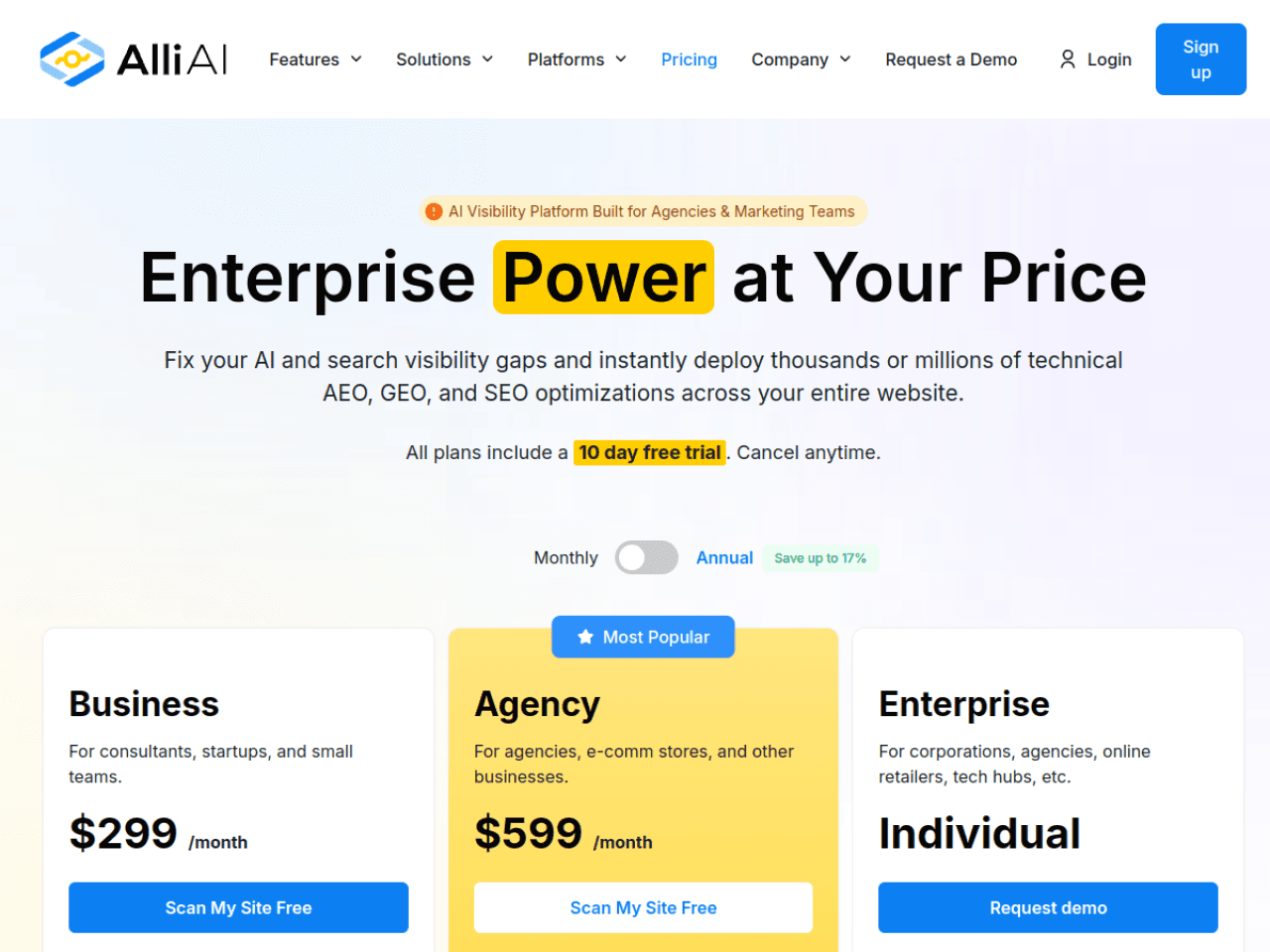
Evaluate it for: agencies or site teams with repeated on-page implementation work. Start with a small, low-risk section before expanding to shared templates or many URLs.
Check carefully: the supported deployment method, which values are changed, how conflicts with existing SEO plugins are handled and what the recovery process covers. Do not infer those details from a headline about the number of pages supported.
Evidence to request in a trial: a controlled change set, rendered-page validation and a demonstrated way to restore the prior state. Include your developer or technical SEO owner in evaluating changes that affect templates or indexing directives.
9. Writesonic: investigate for content and AI visibility workflows
Writesonic combines content production with SEO and AI search visibility features. Its Starter entry is listed at $79 per month on annual billing, with article, audit and prompt limits. The current matrix distinguishes limited agentic workflow trials and higher-tier capabilities; sentiment and action features should not be assumed available in every plan. Source: Writesonic pricing.
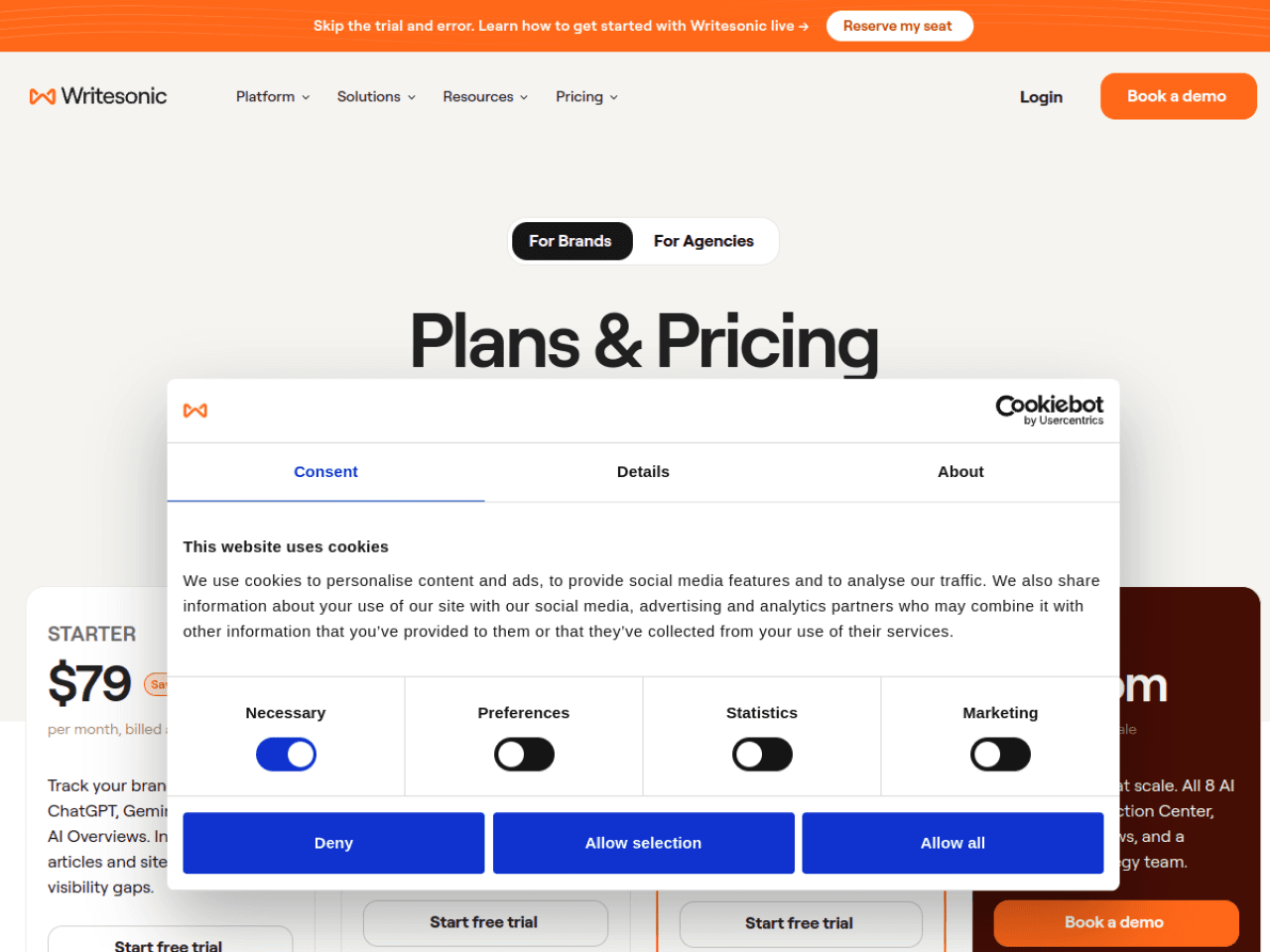
Evaluate it for: marketing teams that want content production and visibility monitoring in one working environment. Test a representative article and the exact prompt set you want to monitor.
Check carefully: whether the plan includes the agentic workflow you intend to use after a trial allowance ends. Verify sentiment, competitor and action features individually rather than treating “AI visibility” as one uniform package.
Evidence to request in a trial: source quality in the article, required editorial changes and repeatable visibility observations. Keep generated content volume, observed AI mentions and organic conversions as separate measures.
10. Fenn: an adjacent option for AI visibility and draft support
Fenn belongs in this comparison as an adjacent option, not an equivalent to a full SEO execution agent. Its current site describes AI visibility checks and proposed website drafts, with plans starting at $29 per month. It explicitly says users approve and publish the changes. Source: Fenn product and pricing.
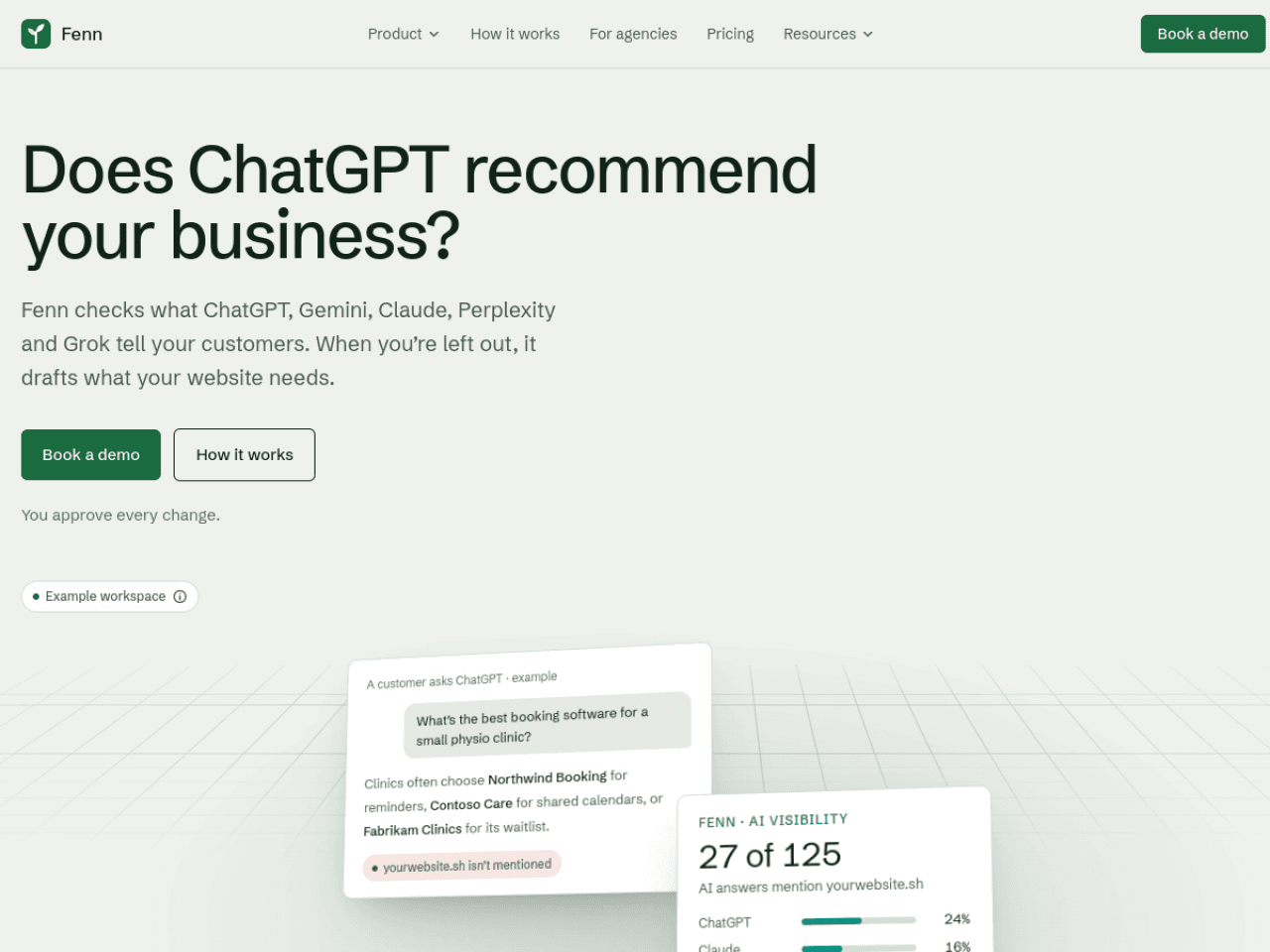
Evaluate it for: a small team exploring brand visibility in AI answers while retaining ownership of publishing. It may fit a narrower need than a research-to-CMS platform.
Check carefully: the tracked prompts, provider coverage, sampling method and the work required to implement recommendations. Observed mentions can vary by prompt and run; a visibility check is not a guarantee that an assistant will recommend your business.
Evidence to request in a trial: the prompt, provider, observation date, cited pages and a proposed edit you can evaluate. Assess the draft against the actual page and publish only changes that help its readers.
Run a useful pilot before buying
Give each finalist the same task, source material and approval boundaries. A practical pilot might ask for an existing page to be researched, improved and prepared for publishing. If the product is a deployment tool, choose a small technical change instead; forcing every product into an article-writing test would distort the comparison.
Record the inputs, output quality, editor time, unsupported steps, integration errors and ongoing cost. Check that the platform preserves your brand context and author information. Ask who owns the next step when the automation stops.
For consequential site changes, require a reviewable proposal and a recovery path. For analysis, require sources and dates. For publishing, inspect the final page, links and metadata. For measurement, use comparable periods and separate observations from causal claims.
Once you have selected a workflow, follow an AI-assisted organic growth workflow to connect implementation with a baseline and review cycle. Buying an agent is an operational decision; traffic growth still depends on choosing worthwhile work and executing it well.
Frequently asked questions
Which AI SEO agent is best?
There is no universal winner. Compare the task, data, execution scope, approvals, integrations and total cost, then run a small pilot with the same success criteria for each finalist.
Were all ten tools tested hands-on?
No. This is an editorial comparison of official product and pricing material reviewed on October 19, 2026, with Keytomic release details checked against current product context. It is not a controlled performance benchmark.
Can an AI SEO agent guarantee more organic traffic?
No. A tool can help complete research, content or technical work, but traffic also depends on demand, relevance, competition, search engine decisions and the quality of implementation.
Is an MCP connection the same as a complete SEO agent?
No. MCP connects an assistant to supported tools. An agent adds task planning and execution, and its practical scope depends on the tools, permissions and verification process available.