AI visibility for B2B SaaS is how often, and how accurately, AI assistants name your product when buyers ask category, comparison and problem questions.
Start with the two free first-party reports. Search Console covers Google AI Overviews and AI Mode; Bing Webmaster Tools covers Copilot citations and citation share.
Paid tools fall into three groups: monitoring-first, content-first and execution-led. Choose by your bottleneck, not by the number of logos on a pricing page.
Monitoring only pays off if someone acts on it. Budget for the content and corroboration work, or pick a platform that does it with you.
Ask ChatGPT which tools a Series A SaaS team should use to track brand mentions in AI answers and you get three to five names. Your buyers are asking the same kind of question about your category, before your sales team knows they exist. Whether your product is one of those names is AI visibility.
This guide is about choosing the tools. For the operating model behind them (entity clarity, prompt mapping, content and corroboration), read our AI search visibility strategy for B2B SaaS. For the wider category, see AI visibility tools and AI visibility tracking tools.
What Is AI Visibility for B2B SaaS?
AI visibility is a set of outcomes, not one score. A brand can be mentioned without being linked, or recommended while being described wrongly. Each outcome needs a different fix.
Outcome | What it looks like | Why it matters |
|---|---|---|
Mentioned | Your brand name appears in the answer | You made the consideration set |
Cited | A URL from your site is linked as a source | Your page is shaping the answer |
Recommended | The answer suggests you for the buyer's use case | Closest thing to a shortlist slot |
Accurately described | Category, features and pricing model match reality | Wrong descriptions cost deals quietly |
Three query types drive most B2B visibility:
Category questions: "What are the best SEO tools for agencies?"
Comparison questions: "Compare Tool A and Tool B for content teams."
Problem questions: "I need a tool that automates keyword research and content briefs."
Traditional dashboards miss all of this. Organic traffic can look flat while a competitor quietly takes the recommendation slot in ChatGPT. Keytomic's SaaS SEO workflow is built around closing that gap.
Start With the Free First-Party Reports
Before paying for anything, turn on the two reports search engines now give away. Both launched in 2026, and between them they cover Google's and Microsoft's AI answers.
Report | Covers | What you get | Main gap |
|---|---|---|---|
Google AI Overviews, AI Mode, Discover AI features | Impressions by page, country, device and date. Available to all sites since August 31, 2026 | No competitor view; Google only | |
Microsoft Copilot, Bing AI summaries, select partners | Citations, cited pages, grounding queries; since June 2026 also intents, topics, citation share and period compare | No clicks; no ChatGPT, Perplexity or Gemini app data |
Bing's citation share is especially useful for B2B teams. It shows what percentage of all citations for a grounding query point to your site, without naming competitors. A low share on a high-intent query is a ready-made content brief.
What neither report covers: ChatGPT, Perplexity, Claude, the Gemini app, competitor share of voice and sentiment. That is the gap paid tools fill.
The Three Categories of AI Visibility Tools
Every tool on the market fits one of three models. The category tells you more about fit than any feature list.
Category | What it does | Best for | Watch out for |
|---|---|---|---|
Monitoring-first | Runs prompts across engines, logs mentions, citations, competitors and sentiment | Teams with content operations already in place | Data with no capacity to act on it |
Content-first | Tracking plus briefs, writing and optimization suggestions | Teams where content production is the bottleneck | Writing quality and editorial control |
Execution-led (all-in-one) | Tracking plus research, writing, publishing and indexing in one workflow | Lean teams without dedicated SEO staff | Depth of any single module vs a specialist tool |
Monitoring-first platforms
These tools run your prompt library on a schedule and report who appears, which URLs get cited and how you compare with competitors. They answer "where do we stand?" and leave the "what next?" to you.
Profound positions itself toward enterprise teams that want broad engine coverage and data to pipe into BI. See Keytomic vs Profound.
Scrunch AI is known for prompt-level configuration, with prompts grouped by persona or journey stage. See Keytomic vs Scrunch AI.
Peec AI focuses on prompt tracking and competitor benchmarking for marketing teams. See Keytomic vs Peec AI.
Otterly.AI offers lighter-weight monitoring for smaller teams. See Keytomic vs Otterly.
Content-first platforms
These combine tracking with help producing the content that earns citations: gap analysis, briefs and AI writing.
Writesonic is an AI writing suite that added brand-mention and share-of-voice tracking. See Keytomic vs Writesonic.
Goodie AI pairs visibility tracking with optimization recommendations and sentiment. See Keytomic vs Goodie AI.
Execution-led platforms
These go from finding a gap to publishing the fix.
Keytomic treats AI visibility as one part of a single workflow: keyword discovery, a 30-day content roadmap, GEO-structured writing, multi-CMS publishing, indexing and AI visibility tracking. For lean teams it removes the handoffs between four separate tools.
Vendor features and plans change month to month. Check current details on each vendor's pricing page or our side-by-side compare pages before you shortlist.
How to Choose an AI Visibility Tool for Your Team
The right category depends on what is actually stopping you.
Your bottleneck | Start with | Why |
|---|---|---|
You have no idea where you stand | Free reports plus a manual prompt log | Builds a baseline before you spend |
You publish consistently but lack AI data | Monitoring-first | Adds the data layer without changing your workflow |
You know the gaps but cannot produce enough content | Content-first or execution-led | Production is the constraint, not insight |
No SEO specialist, several tools to coordinate | Execution-led | One workflow replaces the handoffs |
Hundreds of pages across several sites | Execution-led with CMS integrations | Manual fixes do not scale |
AI visibility on a tight budget
You can do serious AI visibility work before you pay for a tool. Move up a tier only when the lower one stops being enough.
Free tier: Search Console's Generative AI report, Bing's AI Performance report and a spreadsheet of 15 to 25 buyer prompts run monthly in ChatGPT, Perplexity and Gemini. Expect two to three hours a month.
One tracker: when manual logging eats more time than it saves, or leadership wants trend lines and competitor share of voice.
All-in-one: when the problem is shipping the fixes, not finding them. One subscription replaces separate tools for research, writing, publishing and tracking.
Prompt volume and engine count drive most of the price in this market, so trim your prompt list to the questions that map to pipeline before you compare plans.
Questions to ask in every demo
Ask | Why it matters | A good answer |
|---|---|---|
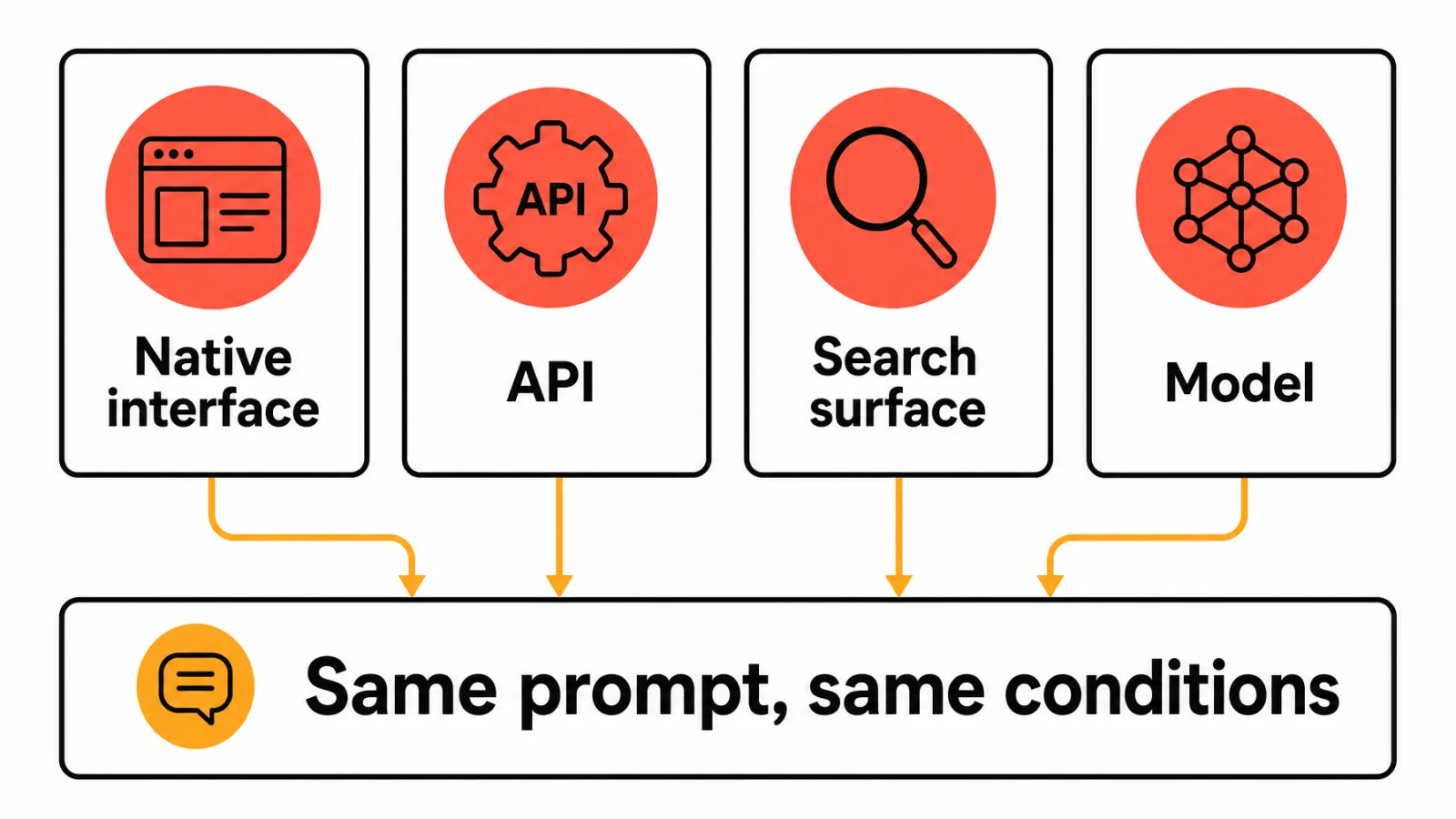
Which engines do you track, and how do you query them? | Logged-out, API and app results can differ | Named engines and a stated method |
How often are prompts run, and from where? | Location and frequency change results | Configurable cadence and location |
Can I see the full answer text and every cited URL? | Scores alone hide what to fix | Raw answers stored and exportable |
Do you show competitor share of voice per prompt? | B2B shortlists are relative | Per-prompt competitor breakdown |
How do you handle answer variance? | One run is not a trend | Repeated runs or confidence ranges |
Is there an API or CSV export? | Leadership reporting lives in BI tools | Documented export or API |
Do you recommend fixes, or make them? | Separates monitoring from execution | A clear, honest answer either way |
What Actually Drives AI Visibility for B2B SaaS
Tools measure visibility; these inputs create it. They are covered in depth in the strategy guide.
Third-party corroboration. A Bain & Company analysis using ScrunchAI data reported that 89% of unbranded prompts were fulfilled by third-party sources. Reviews, editorial coverage and community discussion matter as much as your own site.
A consistent product entity. Use the same category, audience and core use cases on your homepage, docs, G2 profile and partner listings. Three different descriptions read as three different products.
Citation-ready buyer pages. Comparison, integration, pricing and use-case pages answer the exact questions buyers ask. Make each claim traceable to an official page.
Technical access. Pages blocked to Googlebot, OAI-SearchBot or PerplexityBot cannot be cited. Check robots.txt and your CDN rules, then make your website agent-ready.
Sources differ by engine, so verify patterns in your own tracking rather than assuming them. Engine-specific playbooks: ChatGPT, Perplexity, Gemini and Google AI Overviews.
Why B2B SaaS Teams Choose Keytomic for AI Visibility
Most AI visibility tools add another login to an already crowded stack. Keytomic is built as one workflow instead. Details below were checked against Keytomic's public pages in October 2026.
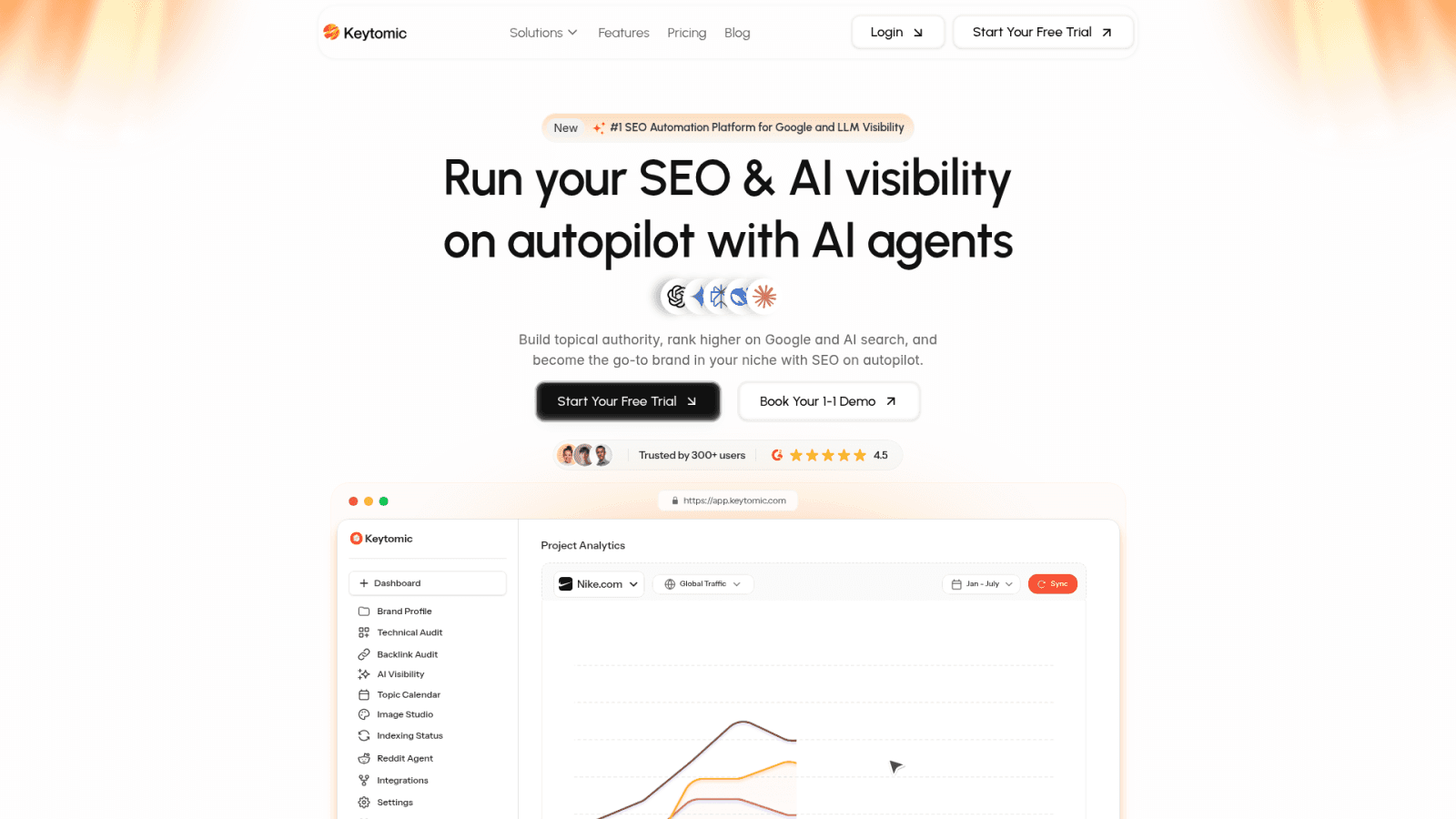
AI Visibility Tracker: runs your buyer prompts across ChatGPT, Perplexity and Gemini on a schedule (weekly by default), recording mentions, cited sources, competitors and context, and building a trend line. See the tracker.
From gap to published page: AI keyword research, a 30-day roadmap, writing, multi-CMS publishing and multi-search engine indexing in the same workspace.
Search data in one place: Google Search Console, GA4 and Bing Webmaster Tools integrations.
Built for teams without SEO specialists: founders, product marketers and lean marketing teams can run it without deep technical SEO knowledge.
Where it is not the right fit: teams that need tracking across many more engines than ChatGPT, Perplexity and Gemini, or enterprise BI pipelines as the primary output. Pair any tool with the free Search Console and Bing reports for Google and Copilot data. Compare plans on Keytomic pricing.
A 30-Day Plan to Get Started
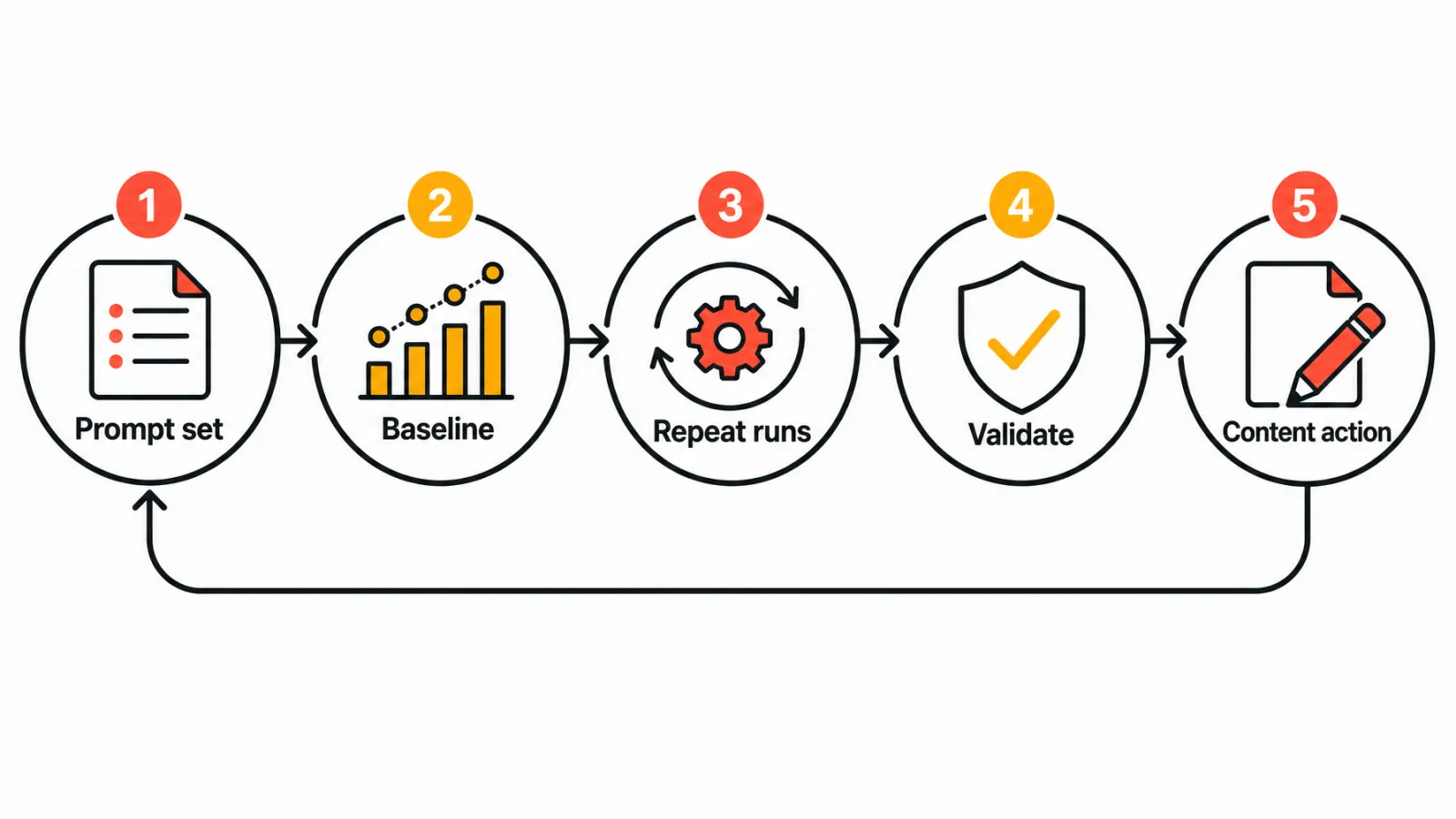
Week 1, baseline: open the Search Console Generative AI report and Bing AI Performance report. Write 15 to 25 buyer prompts across category, comparison and problem types, and run them in ChatGPT, Perplexity and Gemini.
Week 2, choose: use the bottleneck table and demo scorecard above. Shortlist no more than two tools.
Week 3, fix: pick the three prompts where you are absent and a competitor appears. Build or update the page that answers each one.
Week 4, re-test: re-run the same prompts under the same conditions and compare with Week 1.
For a longer runway, follow our 30-day AI search optimization roadmap.
Common Mistakes When Choosing an AI Visibility Tool
Buying monitoring with no one to act on it. Numbers without content capacity change nothing.
Tracking one engine. ChatGPT, Google AI Overviews and Perplexity retrieve and cite differently.
Dropping classic SEO. AI Overviews and Copilot both retrieve from search indexes, so crawlability and rankings still matter.
Treating one run as a trend. Answers vary by session, location and model update.
Expecting a fixed timeline. Changes surface only after recrawl and re-evaluation. Measure at 30, 60 and 90 days.
FAQs About AI Visibility for B2B SaaS
What is AI visibility for B2B SaaS?
It is how often and how accurately AI assistants such as ChatGPT, Perplexity, Gemini, Copilot and Google AI Overviews mention, cite and recommend your product when buyers ask questions about your category.
Do I need a paid AI visibility tool?
Not to start. Search Console and Bing Webmaster Tools cover Google and Microsoft AI answers for free, and a monthly prompt spreadsheet covers the rest. Paid tools earn their cost when manual tracking stops scaling.
Which AI engines should a B2B SaaS company track first?
Start where your buyers research: usually ChatGPT and Google AI Overviews. Add Copilot if you sell into Microsoft-heavy enterprises, since Bing's report makes it free to track.
What is the best AI visibility tool for a B2B SaaS startup on a budget?
Begin with the free stack. When you outgrow it, choose a single tracker if insight is the gap, or an all-in-one platform if production is the gap.
How long does it take to improve AI visibility?
There is no fixed timeline. Updated pages need to be recrawled and re-evaluated, and engines change behavior with model updates. Track the same prompts at 30, 60 and 90 days.
Can small SaaS teams compete with bigger brands in AI answers?
Often, yes. AI answers reward specific, well-corroborated answers to narrow questions, and smaller teams can own those faster than large brands with generic content.
One question worth asking before you sign anything: if a tool showed you tomorrow that a competitor owns your top ten buyer prompts, who on your team would fix it, and how fast?